
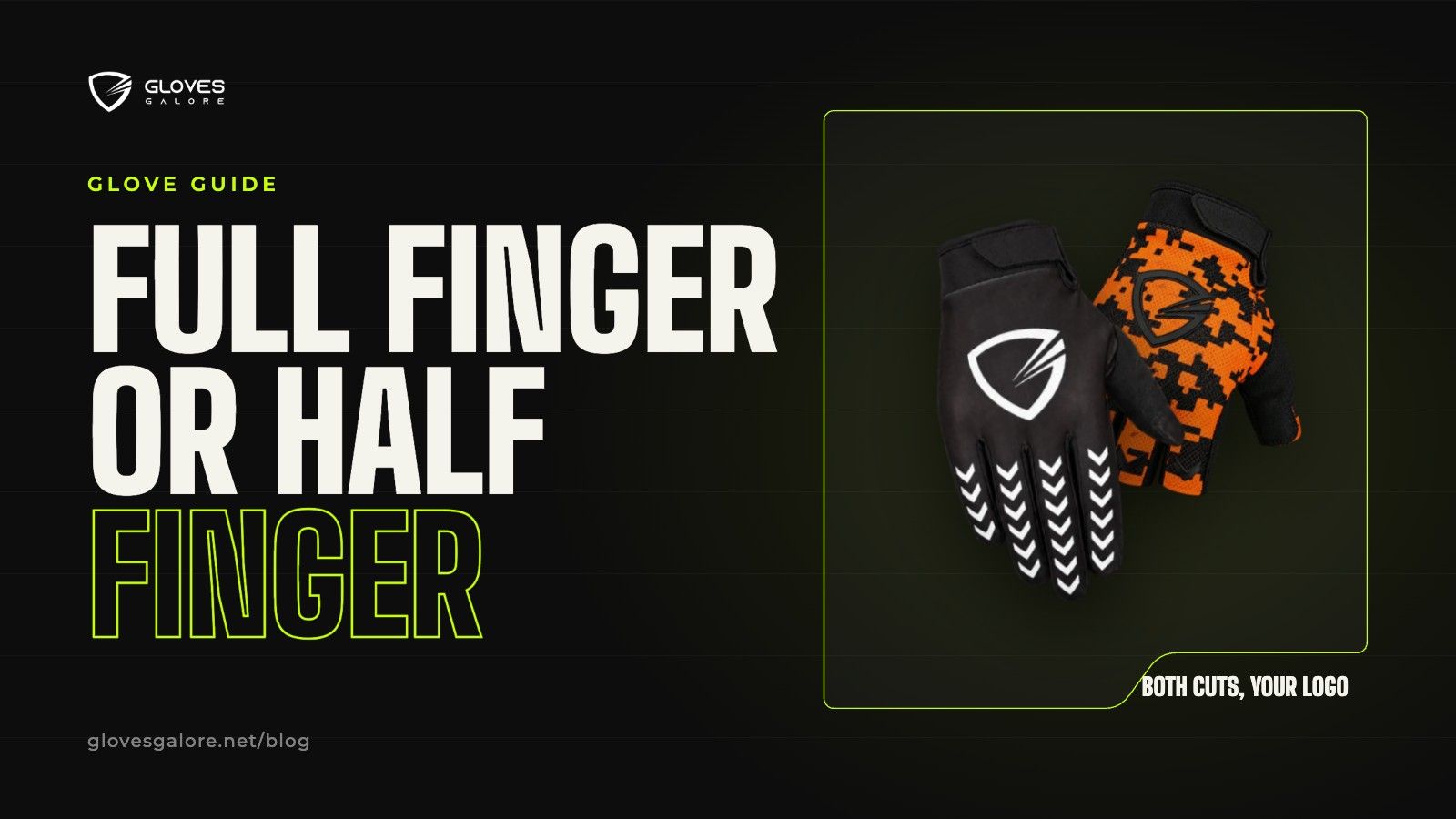
Every rider who buys cycling gloves has to choose between full finger and half finger, and the answer is not the same for everyone. A downhill rider and a summer road rider want very different things from a glove, and a shop or brand that stocks gloves needs to know which of the two its customers will actually buy.
We make both kinds for MTB, BMX, motocross and gym brands, so we see the reasons riders choose one over the other. This guide compares them point by point and then gives a clear answer for each kind of riding.
What each glove is
A full finger glove covers the whole hand, including the fingertips. It usually has a thin palm for bar feel, a stretch back and a cuff that closes with a Velcro tab or slips on. Protective versions add padding or a hard shell over the knuckles.
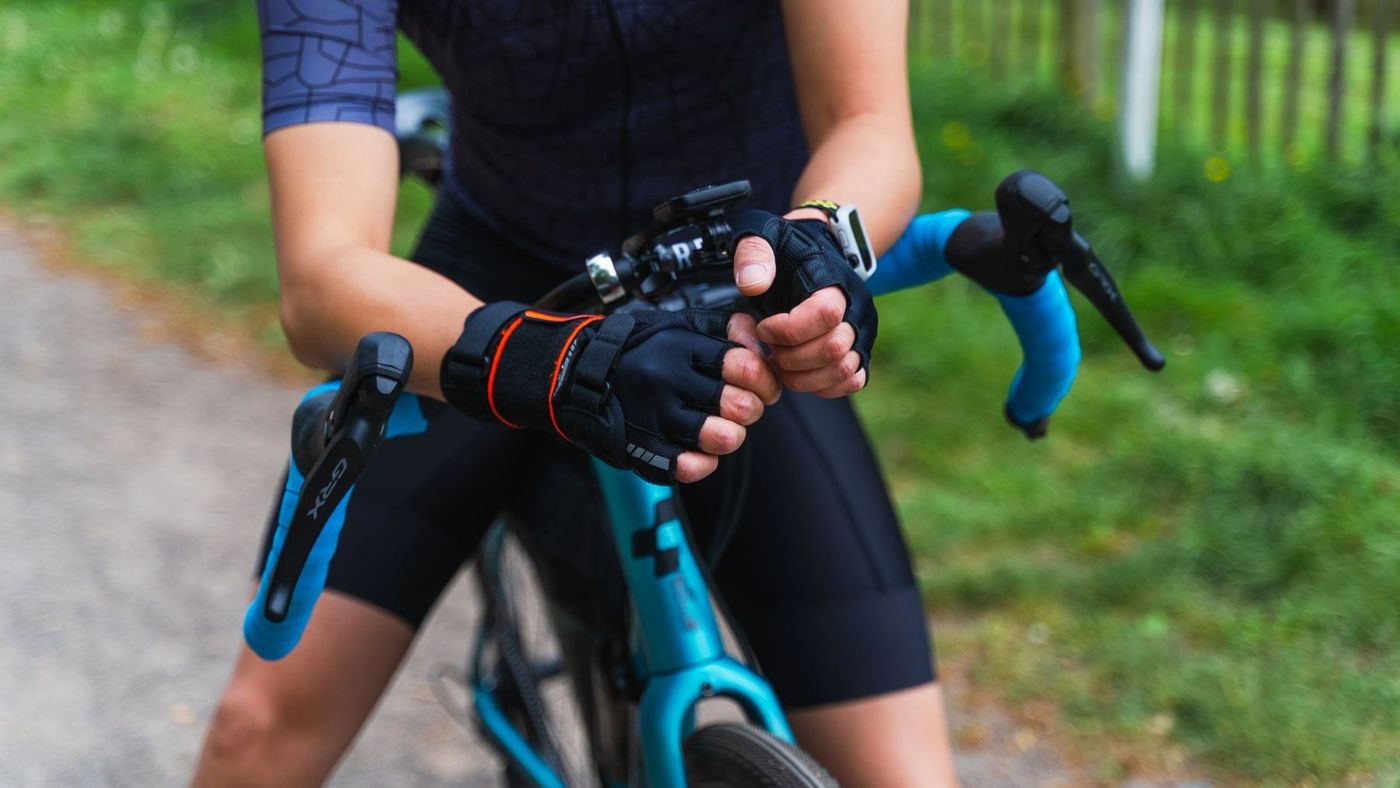
A half finger glove, also called a fingerless glove or a short finger glove, stops around the middle of each finger and leaves the fingertips bare. It usually has a padded palm and a mesh or Lycra back, and small pull tabs between the fingers to help take it off.
Protection
This is the biggest difference. When a rider falls, the hands hit the ground first, and the fingers are often the first thing to scrape. A full finger glove protects the whole hand, while a half finger glove leaves the fingertips and the top of the fingers bare.
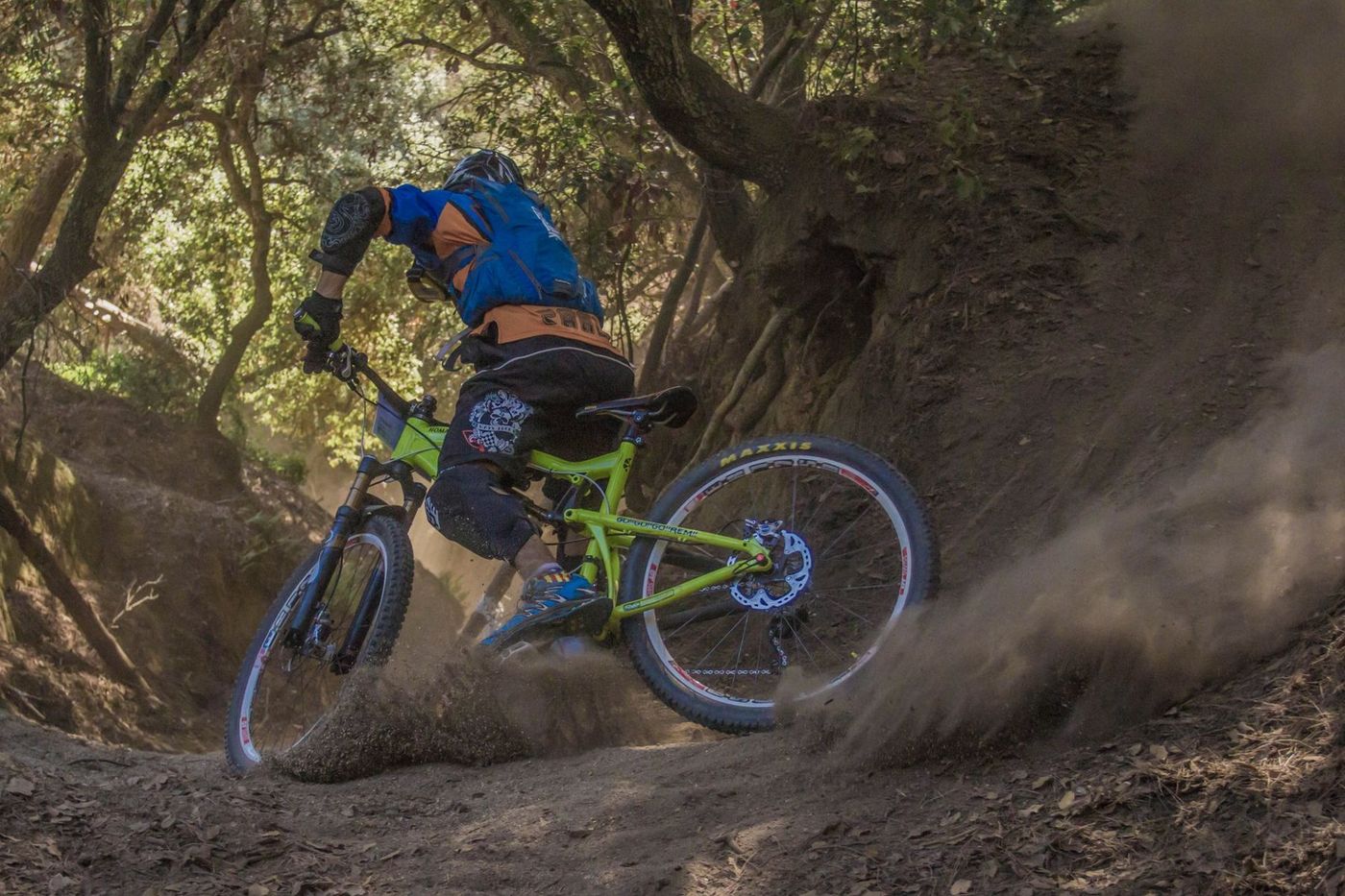
Trail branches, rocks and brush also catch the fingers of mountain bikers far more often than road riders expect. That is why full finger gloves are close to standard in MTB, BMX and motocross. If the glove has a moulded knuckle shell, like our Armor Pro, it also protects the back of the hand against impacts.
Grip and control
A full finger glove puts material between the fingertips and the brake levers, which sounds like a drawback, but a good thin palm actually improves grip. It stops sweaty fingers from slipping on the levers, and a silicone print on the fingertips gives even more hold in the wet.
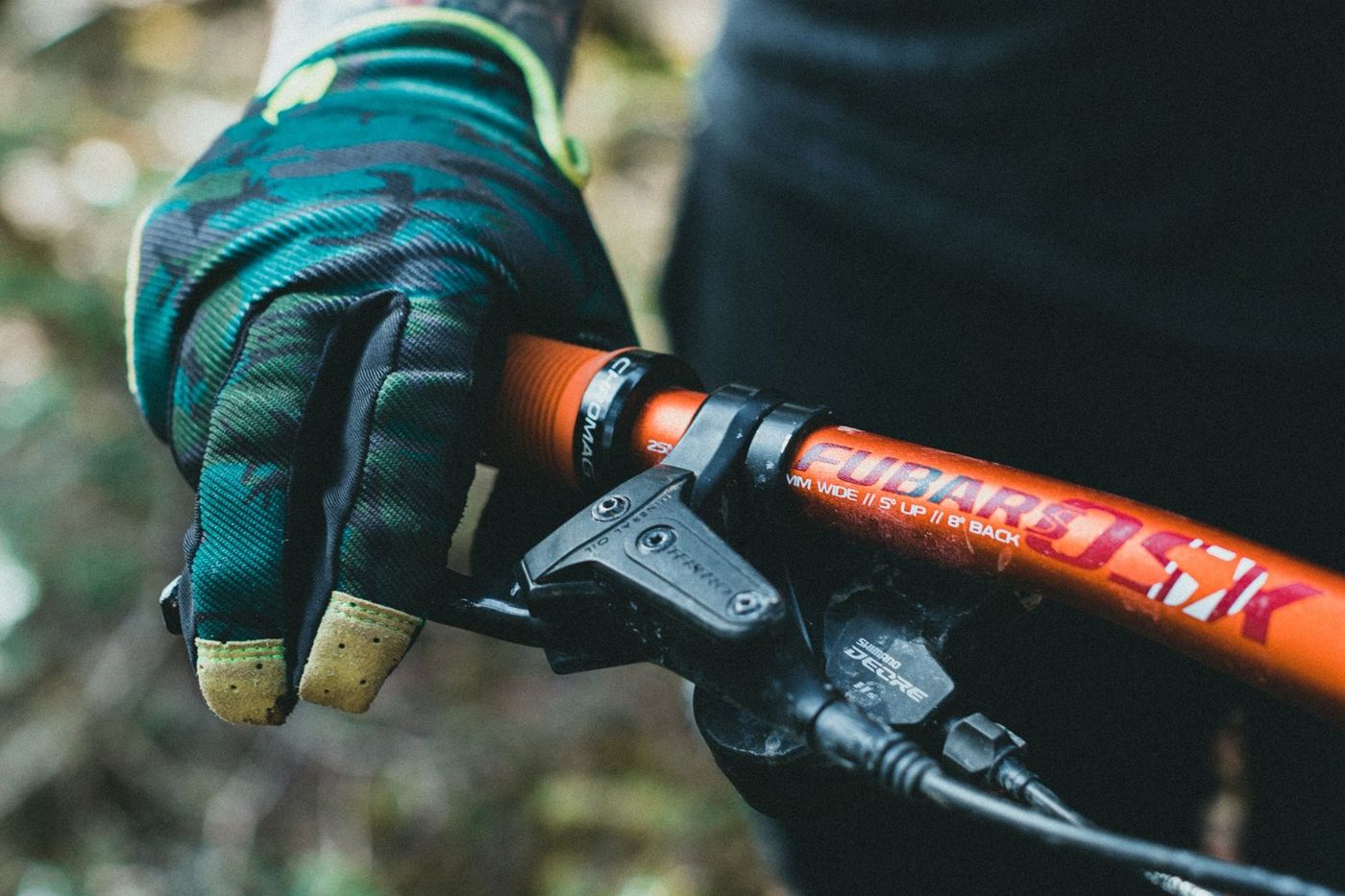
A half finger glove gives bare fingertips direct contact with the levers and shifters. Some riders like that feel, especially on the road, where the hands stay on the bar for hours and fine control matters more than protection.
Comfort and airflow
Half finger gloves are cooler. With the fingertips open, heat escapes and sweat dries faster, which is why many road riders and gym users prefer them in summer.
Full finger gloves can still be comfortable in the heat if they are built for it. A thin palm, a breathable Lycra or mesh back and no heavy padding make a full finger glove that most trail riders wear all year. In cold weather, a full finger glove is the only real option, and for proper winter riding a thicker insulated glove is needed.
Phones and fine tasks
Bare fingertips make it easy to use a phone, a bike computer or a zip without taking the glove off. Many full finger gloves now have touchscreen-friendly fingertips, but they are never quite as precise as a bare finger. For riders who stop often to check a map or take photos, that small convenience matters.
Which glove for which kind of riding
- Mountain biking, trail and enduro. Full finger is the right choice because of branches, rocks and falls, and a thin palm keeps the bar feel.
- Downhill and motocross. A full finger glove with stronger protection, such as knuckle padding or a hard shell, is the better choice.
- BMX. A full finger glove with a slim palm and little padding works best, because BMX riders need to feel the bars for tricks and pumping.
- Road cycling in warm weather. Half finger is the popular choice, because it keeps the hands cool and the padded palm helps on long rides.
- Gravel and touring. Riders split between the two, but many choose half finger in summer and full finger for rough or cold days.
- Gym and weightlifting. Half finger is the usual choice, because lifters want to feel the bar with their fingers and only need the palm protected.
Which one should a brand or shop stock?
If you are launching your own glove or choosing stock for a shop, start with the kind of riding your customers do. A shop near mountain bike trails will sell far more full finger gloves, and a road cycling club will ask for half finger gloves for the summer season.
For a new MTB, BMX or motocross brand, a full finger glove is the safer first product, because it is what most riders in those sports wear all year. A half finger glove makes a good second product for summer, for road riders or for the gym. Our own range follows the same idea, with eight full finger gloves such as Stealth Arrow and two half finger gloves, Toxic Pixel and Blaze Pixel.
Because we have no minimum order, you do not have to guess. You can order a small run of each, see which one your riders buy, and put the bigger order on the winner. If you are still working out your first product, our guide on how to start a cycling glove brand covers the rest of the steps.
Make either one with your branding
Every glove in our range can be made in your colours with your logo, as a full finger or a half finger version. Send us your idea with the kind of riding it is for, and we will make a free sample so you can feel the difference on your own bike.


